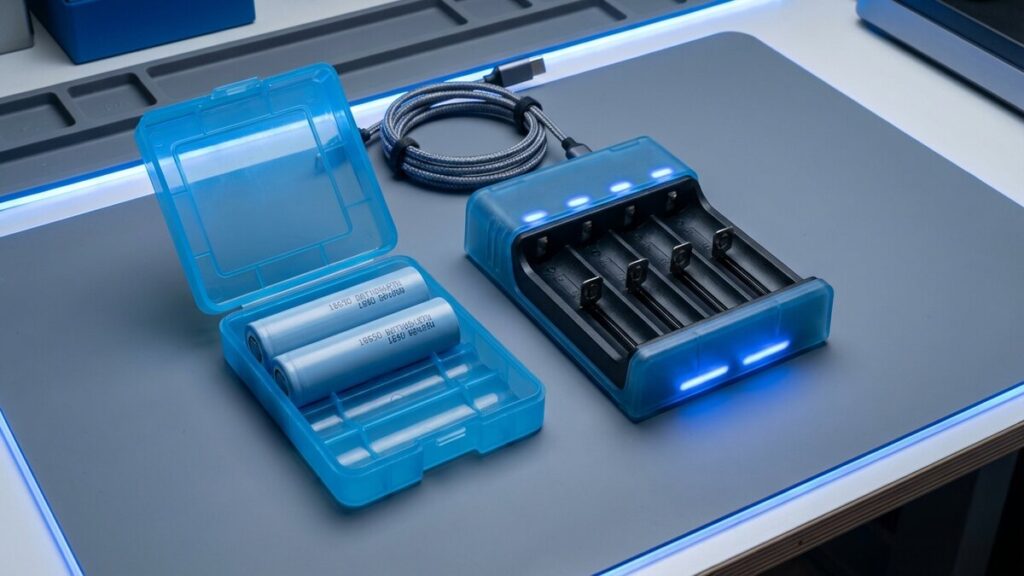
Batteries are the power source behind every vape device, and treating them with respect is not optional. Unlike most consumer electronics where the battery is sealed away and managed entirely by software, many vaping devices use removable lithium-ion cells that the user is responsible for handling, charging, and maintaining. Understanding battery safety is critical for preventing accidents and ensuring a long, trouble-free vaping experience.
Understanding Vape Batteries
The vast majority of removable vape batteries are 18650 lithium-ion cells, named after their dimensions: 18mm in diameter and 65mm in length. Some newer devices use 20700 or 21700 cells, which are slightly larger and offer increased capacity and current handling. Regardless of the specific size, the safety principles are the same.
Lithium-ion batteries store a significant amount of energy in a compact space. When handled correctly, they are safe and reliable. When mishandled, they can vent hot gases, catch fire, or in extreme cases, explode. These incidents are preventable with proper knowledge and habits.
Buying Safe Batteries
Stick with Reputable Brands
Always purchase batteries from established manufacturers with a track record of safety. The most trusted brands for vaping batteries include Samsung, Sony/Murata, LG, and Molicel. These companies produce cells that are thoroughly tested and rated with honest specifications.
Avoid batteries sold under unfamiliar brand names that claim specifications that seem too good to be true. Some rewrapped batteries use lower-quality cells relabeled with inflated ratings. An 18650 battery claiming 4000mAh capacity and 40A continuous discharge, for example, does not exist from any legitimate manufacturer. The actual cell inside may be dangerously undersized for the loads it is being marketed for.
Continuous Discharge Rating (CDR)
The continuous discharge rating (CDR) tells you the maximum current the battery can safely deliver without overheating. This is the most important specification for vaping safety. Your device draws a certain amount of current based on the wattage setting and coil resistance, and the battery must be rated to handle that load.
For most regulated mods, a CDR of 15A to 25A is sufficient. Common choices include:
- Samsung 25R: 20A CDR, 2500mAh capacity. An excellent all-around choice.
- Samsung 30Q: 15A CDR, 3000mAh capacity. Great for lower-wattage setups where battery life is the priority.
- Sony VTC5A: 25A CDR, 2600mAh capacity. A top choice for higher-wattage vaping.
- Molicel P26A: 25A CDR, 2600mAh capacity. A newer option with excellent performance.
Never exceed the CDR of your battery. If you are unsure how much current your device draws, consult a battery safety calculator or ask in an online vaping community.
Battery Wraps and Physical Inspection
Every 18650 battery is enclosed in a thin plastic wrap that insulates the positive casing from the negative terminal. This wrap is a critical safety component, not just decoration. If the wrap is torn, nicked, or peeling, the exposed metal can make contact with conductive surfaces inside your mod, potentially causing a short circuit.
Inspecting Your Batteries
Get into the habit of visually inspecting your batteries every time you remove them from the charger or device. Look for:
- Tears or nicks in the wrap: Even a tiny tear near the positive terminal can cause a short.
- Dents or deformation: A dented battery has suffered physical damage and should be retired immediately.
- Corrosion or discoloration: Any signs of corrosion on the terminals indicate the battery has been exposed to moisture or is degrading.
- Insulator ring damage: The plastic ring around the positive terminal separates it from the negative casing. If this ring is damaged or missing, the battery is unsafe.
Rewrapping Damaged Batteries
If the wrap is torn but the cell underneath shows no dents, corrosion, or other damage, you can rewrap the battery with a new heat-shrink wrap. Battery wraps are inexpensive and easy to apply with a hair dryer. Pre-cut wraps and insulator rings are available from most vape shops. If you are not comfortable rewrapping a battery yourself, replace it with a new cell.
Charging Safety
How you charge your batteries matters just as much as how you use them.
Use a Dedicated External Charger
For devices with removable batteries, always charge them in a dedicated external charger rather than charging through the USB port on the mod. External chargers are designed specifically for lithium-ion cells and offer more precise charging control. They also reduce wear on the USB port of your mod, which can fail over time.
Quality external chargers from brands like Nitecore, Efest, and Xtar provide features such as individual cell monitoring, overcharge protection, and reverse polarity protection. A two-bay or four-bay charger is a worthwhile investment that pays for itself in battery longevity and safety.
Do Not Leave Batteries Unattended While Charging
While modern chargers include safety features, lithium-ion batteries should not be left charging overnight or while you are away from home. Charge them in a location where you can monitor them and on a non-flammable surface. If a battery becomes unusually hot during charging, remove it from the charger immediately and inspect it for damage.
Avoid Overcharging and Over-Discharging
Lithium-ion batteries should be charged to a maximum of 4.2 volts and should not be discharged below 2.5 volts. Most regulated mods have low-voltage cutoff protection that prevents over-discharging, and quality chargers stop charging at 4.2 volts. However, leaving batteries in a completely dead state for extended periods can cause permanent damage to the cell chemistry.
Carrying and Storing Batteries
Improper storage and transport of batteries is one of the most common causes of vaping-related incidents.
Never Carry Loose Batteries
This cannot be stressed enough: never carry loose batteries in your pocket, purse, or bag alongside metal objects. Keys, coins, or other batteries can bridge the positive and negative terminals, creating a short circuit. A shorted lithium-ion battery can reach temperatures hot enough to cause severe burns and ignite surrounding materials within seconds.
Use a Battery Case
Always transport spare batteries in a dedicated plastic or silicone battery case. These cases cost a dollar or two and provide complete protection against accidental shorts. Many vapers keep a case on their keychain or in their everyday carry bag. There is no acceptable alternative to a proper case. Wrapping a battery in a napkin or putting it in a separate pocket is not safe.
Storage Conditions
Store batteries at room temperature in a dry location, away from direct sunlight and heat sources. Extreme heat accelerates chemical degradation and increases the risk of thermal runaway. Do not leave batteries in a hot car, near a window in direct sunlight, or on top of appliances that generate heat.
For long-term storage (weeks or months), charge batteries to approximately 3.7 volts (about 40-50% capacity) before putting them away. This is the optimal storage voltage for lithium-ion cells and minimizes degradation over time.
Married Batteries in Dual-Battery Mods
If your device uses two or more batteries, those cells should be “married,” meaning they are the same brand, model, and age, and are always used and charged together as a set. Married batteries wear at the same rate, which keeps them balanced and prevents one cell from being overworked.
- Buy married batteries at the same time from the same source.
- Always charge them together and insert them into the device at the same time.
- Mark them with a number or letter so you can track the pair.
- If one battery in a married pair becomes damaged, retire both and start a new pair.
Using mismatched batteries in a dual-battery mod can cause uneven discharge, which stresses the weaker cell and creates a safety hazard.
When to Retire a Battery
Lithium-ion batteries do not last forever. Their capacity and current-handling ability degrade with each charge cycle. Most quality 18650 cells maintain good performance for 200 to 300 full charge cycles, which translates to roughly 6 to 12 months of regular use for most vapers.
Replace your batteries when you notice:
- Significantly reduced battery life compared to when they were new
- The battery taking much longer to charge than usual
- Any physical damage including dents, swelling, or corrosion
- The battery getting unusually hot during normal use
Dispose of old batteries responsibly. Most electronics retailers and recycling centers accept lithium-ion batteries. Never throw them in the regular trash.
Built-In Battery Safety
Many vape devices, particularly pod systems and compact mods, have non-removable internal batteries. While you cannot inspect or replace these cells, the same principles of care apply: do not expose the device to extreme heat, do not charge overnight unattended, use the provided charging cable, and replace the device if it becomes physically damaged or the battery swells (the case may bulge or become difficult to close).
Browse our Devices collection for mods with the latest battery safety features, and check out our PVS and Mods section for options that support the batteries you prefer.
Quick Safety Checklist
- Buy batteries from reputable brands only (Samsung, Sony/Murata, LG, Molicel).
- Inspect battery wraps before every use. Rewrap or replace damaged cells.
- Use a dedicated external charger for removable batteries.
- Never carry loose batteries in your pocket. Always use a case.
- Store batteries at room temperature, away from heat and sunlight.
- Marry batteries in dual-cell devices. Use and charge them as a set.
- Retire batteries that show reduced performance, damage, or unusual heat.
- Never exceed the continuous discharge rating of your batteries.
- Do not charge batteries unattended overnight.
- Dispose of old batteries at a recycling center, never in the trash.
Final Thoughts
Battery safety is the most important aspect of vaping that many people overlook. The overwhelming majority of vaping incidents that make the news are the result of battery mishandling, not device malfunctions. By following the guidelines in this article, you eliminate virtually all risk and can enjoy your device with confidence.
Invest in quality batteries, treat them with care, and they will power your vaping experience reliably for months. Visit our Devices and PVS and Mods collections to find hardware built with safety in mind, and always pair your device with cells rated for the job.