Disclosure: This article contains affiliate links. If you purchase through our links, we may earn a commission at no extra cost to you. This helps support our testing and editorial work. Read our full affiliate disclosure.
Quick answer: If you own a Freemax Mesh Pro, Fireluke Pro or M Pro 2 tank, the 0.2Ω Double Mesh coil at 60–80W is the one to buy first. It has the best balance of flavor, vapor and coil life of the four, and it runs happily on any 80W+ mod. Go Single Mesh if you vape under 60W and want the coils to last, Triple or Quad only if you run 90W+ and chase clouds.
Vapingparts is reader-supported. When you buy through links on our site, we may earn an affiliate commission at no extra cost to you.
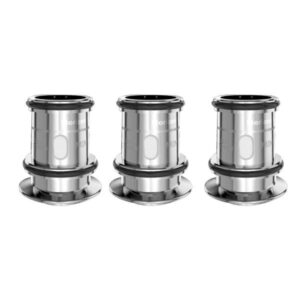
🏆 Freemax Mesh Pro Coils — In Stock Now
- Double Mesh 0.2Ω — 3-pack → Best all-rounder, 60–90W
- Single Mesh 0.15Ω — 3-pack → Best flavor and coil life, 40–70W
- Triple Mesh 0.15Ω — 3-pack → Dense clouds, 80–110W
- Quad Mesh 0.15Ω — 3-pack → Maximum vapor, 90–120W
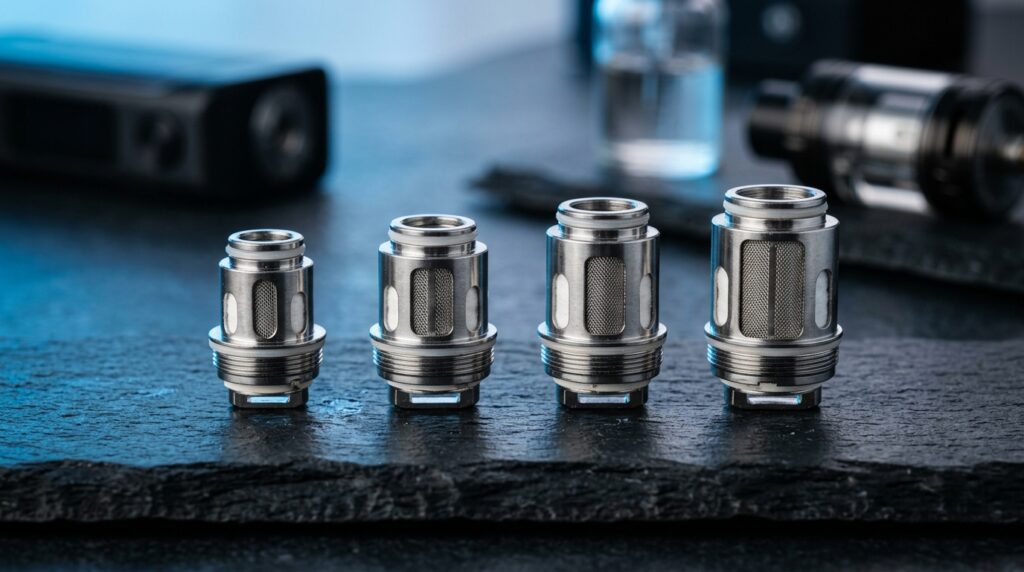
Freemax built its reputation on one idea: more mesh, more surface area, more flavor. The Mesh Pro coil family is where that idea got out of hand in the best way — one, two, three and four strips of mesh in a single coil head, each tuned for a different wattage band. Four years on they are still one of the most-asked-about coil lines we see, mostly because the names tell you how many strips are inside but not which one you should actually buy. This guide fixes that.
If you are new to coils in general, start with our complete vape coils guide; for how Freemax compares to SMOK, GeekVape and Uwell heads, see best replacement coils for every vape.
Freemax Mesh Pro coils at a glance
| Coil | Resistance | Rated range | Sweet spot | Best for |
|---|---|---|---|---|
| Single Mesh | 0.15Ω | 40–70W | 50–60W | Flavor, long coil life, lower-powered mods |
| Double Mesh | 0.2Ω | 60–90W | 65–80W | All-day balance of flavor and vapor |
| Triple Mesh | 0.15Ω | 80–110W | 85–100W | Warm, dense vapor on a dual-battery mod |
| Quad Mesh | 0.15Ω | 90–120W | 95–110W | Maximum cloud production |
| SS316L Single Mesh | 0.12Ω | 40–70W / TC | 400–530°F in TC | Temperature-control users |
All five are drop-in heads for the same tanks and all use organic cotton wicking around kanthal mesh (the SS316L version swaps the mesh material so it works in temperature-control mode). They are sold singly or in 3-packs; the 3-packs work out at roughly $4 a coil.
Which Mesh Pro coil should you buy?
Single Mesh 0.15Ω — the flavor pick
One wide strip of mesh and the smallest chamber of the four. At 50–60W it gives the most focused flavor in the family, the vape runs cooler, and because it draws the least current it is the kindest to a single-battery mod and the slowest to gunk up. If you mostly vape fruit or menthol liquids at moderate power, this is the coil. The trade-off is vapor: it will not fog a room.
Double Mesh 0.2Ω — the one to start with
Two strips, a touch higher resistance, and a 60–90W window that lines up with what most dual-battery mods and 80W pod-mods are comfortable at. Flavor is nearly as sharp as the Single, vapor is noticeably thicker, and the coil still lasts a sensible one to two weeks on dessert liquids. When people ask us “which one?”, this is the answer nine times out of ten.
Triple Mesh 0.15Ω — the warm, dense vape
Three strips means more metal to heat and more liquid vaporised per puff. Below 80W it feels under-powered and muted; at 85–100W it comes alive with a warm, thick draw that suits creamy and tobacco liquids. You will drain a 5ml tank quickly and a 2×18650 mod is the minimum; the Triple is where a 3-battery mod starts to make sense.
Quad Mesh 0.15Ω — for cloud chasers only
Four strips and a 90–120W rating. This is a lot of coil: it pulls serious current, it eats juice at a rate you can watch, and on anything under 90W it tastes flat because the mesh never gets properly hot. On a 200W+ mod with high-VG liquid it produces the biggest, warmest clouds of any stock coil Freemax has made. Buy it for what it is.
SS316L Single Mesh 0.12Ω — for temperature control
Same single-strip design in stainless steel so a TC-capable mod can regulate it by temperature instead of wattage. Set 400–530°F (roughly 205–275°C) and the mod stops the coil from ever going past the point where cotton scorches — the closest thing to a burnt-hit-proof coil. It also works in plain wattage mode at 40–70W if your mod lacks TC.
Which tanks take Mesh Pro coils?
Mesh Pro heads fit the Freemax Mesh Pro tank they were designed for, the Fireluke Pro, and the M Pro 2 (which was built to accept both the Mesh Pro line and Freemax’s later 904L M coils). They do not fit the Fireluke 4, which uses the smaller 904L X heads, or the Maxus Pro, which uses 904L M heads. If you own one of the newer tanks and like the Mesh Pro recipe, the 904L M2 0.2Ω coil is the closest modern equivalent — same dual-mesh idea, tighter tolerances.
Priming and break-in: do this or you will burn it
Mesh coils wick fast but they also heat fast, and a Mesh Pro has a lot of cotton to saturate. Every burnt Freemax coil we have been sent to look at was burnt in the first ten minutes of its life.
- Drip onto every exposed cotton port. Mesh Pro heads have large side ports; put 4–6 drops on each until the cotton is visibly dark, then a few drops down the centre.
- Fill the tank and wait ten minutes. Longer for 70%+ VG liquids. Pulling on the drip tip with the mod off a few times helps draw liquid in.
- Start 15–20W below the bottom of the rated range — 40W for a Double, 65W for a Triple — and take a dozen short puffs before stepping up 5W at a time.
- Stay inside the printed range. The number on the coil is not a suggestion; the Single Mesh at 90W is a one-day coil.
For the full routine, including what to do if you have already scorched one, see coil maintenance: when and how to replace vape coils.
How long do Mesh Pro coils last?
With fruit or menthol liquids under 6mg and sensible wattage, expect two to three weeks from a Single or Double. Dessert, custard and heavily sweetened liquids cut that to a week or less — sucralose caramelises on the mesh and nothing you do will clean it off. Triple and Quad coils run hotter and die sooner, typically 7–10 days of regular use. Signs it is done: flavor goes flat before it goes burnt, the mesh looks dark through the ports, and the draw starts to crackle more than usual. Our coil-life guide covers the habits that get you to the long end of those ranges.
Common problems and fixes
| Symptom | Likely cause | Fix |
|---|---|---|
| Burnt taste on a new coil | Under-primed, or started too high | Replace it. Prime the next one properly and start 15W low |
| Muted flavor | Wattage below the rated range (common with Triple/Quad) | Step up in 5W increments until it opens up |
| Spitback / gurgling | Flooded coil — over-primed, or tank left on its side | Fire the mod for a second with the tip covered by a tissue; close airflow a notch |
| Leaking from airflow | Worn coil base o-ring, or thin high-PG liquid | Check the o-ring when you swap coils; use 60/40 VG/PG or thicker |
| Coil dies in days | Sweetened liquid, or running at the top of the range | Switch to a less sweet juice or drop 10W; the Single lasts longest |
Frequently asked questions
Are Mesh Pro coils the same as Fireluke Mesh coils?
No. The original Fireluke Mesh tank takes its own single-mesh head. Mesh Pro coils are a different size and only fit the tanks listed above.
Can I run the 0.15Ω Single Mesh on a 40W mod?
Yes — 40W is the bottom of its range and it performs well at 45–50W. Make sure the mod can actually fire a 0.15Ω load; most regulated mods can, but some small pod-mods cap at 0.3Ω.
Why do the Single, Triple and Quad all read 0.15Ω?
Resistance is set by the mesh strip geometry, not the count; Freemax tuned each so the wattage range tells you what the coil is for. Resistance alone will not tell you which head you have — read the label on the side.
Are there fake Mesh Pro coils?
Yes, and they are the usual explanation for a coil that tastes wrong out of the box. Genuine packs carry a scratch-off authenticity code you can check on Freemax’s site. Buying from an established retailer rather than a marketplace listing avoids the problem.
Last updated: October 2026