Traveling with a vape can feel overwhelming if you don’t know the rules. Between TSA regulations, airline policies, and wildly different international laws, there’s a lot to keep straight. The good news? Once you understand the basics, traveling with your vape is simple and stress-free. This guide covers everything you need to know — from packing your device for a flight to navigating vaping laws in other countries.
TSA Rules for Vapes
The Transportation Security Administration (TSA) has clear rules about vaping devices and e-liquids. Here’s what you need to know before you head to the airport:
- Carry-on only: All vape devices, e-cigarettes, and spare lithium batteries must go in your carry-on bag or on your person. They are banned from checked luggage — no exceptions.
- E-liquids follow the 3-1-1 rule: Each container must be 3.4 ounces (100ml) or less. All containers must fit in a single quart-sized clear plastic bag.
- No loose batteries in checked bags: Lithium-ion batteries (the kind in every vape) are a fire hazard in the cargo hold. Always keep them in your carry-on.
- Devices should be powered off: TSA recommends turning off your device and locking the fire button if possible to prevent accidental activation.
TSA officers may ask you to remove your vape device during screening, similar to laptops and large electronics. Keep it accessible in your bag to avoid hold-ups at the checkpoint.
How to Pack Your Vape for Flying
Cabin pressure changes at altitude can cause e-liquid to leak from tanks and pods. A few minutes of prep before your flight saves a messy cleanup later:
- Empty your tank: Drain your tank or pod as much as possible before boarding. Pressure changes force liquid through the coil and out the airflow holes.
- Remove external batteries: If you use a box mod with removable batteries, take them out and store them in a dedicated battery case.
- Store upright: Keep your device standing upright in your bag. This reduces the chance of leaking through the drip tip or airflow slots.
- E-liquid in a sealed bag: Put all e-liquid bottles in your quart-sized liquids bag. Even if the bottles are under 100ml, loose bottles can leak under pressure.
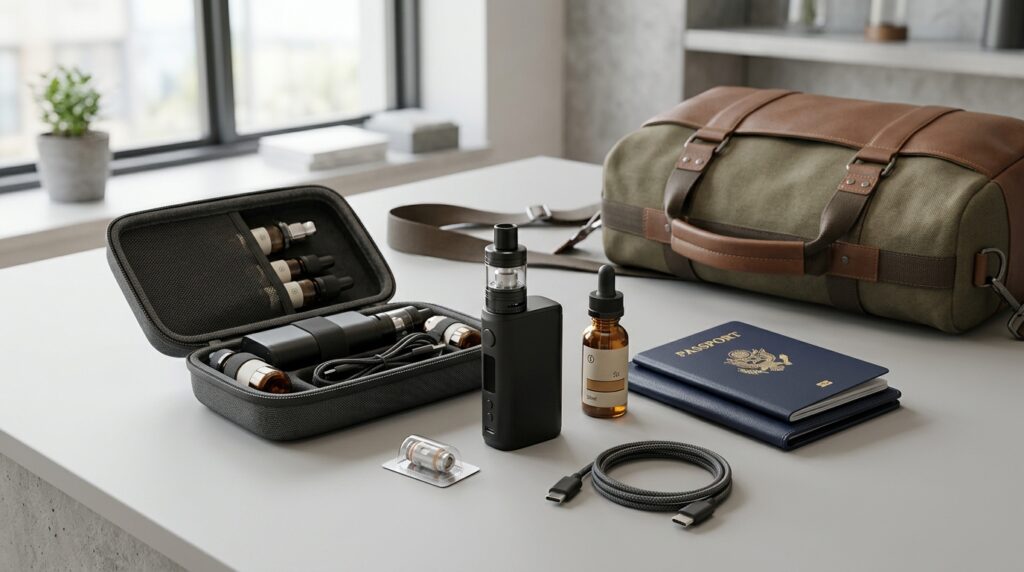
- Use a protective case: A padded case protects your device from getting crushed and keeps everything organized in one place.
Pro tip: If you’re flying with a starter kit or pod system, consider traveling with sealed, pre-filled pods instead of carrying bottles of e-liquid. They’re less likely to leak and easier to pack.
Airline-Specific Policies
While the TSA sets the rules for security screening, individual airlines set their own policies for what happens once you’re on the plane:
- Vaping on planes is banned: Every major airline prohibits using vape devices in-flight. In the United States, vaping on a commercial flight is a federal offense that can result in fines up to $4,000.
- Charging during flight: Most airlines prohibit charging vape devices via USB ports on the plane. Don’t plug your device in during the flight.
- Asian and Middle Eastern carriers: Some airlines — particularly in Southeast Asia and the Middle East — restrict even carrying vape devices on board. Emirates, Qatar Airways, and several Asian carriers have stricter policies. Always check your specific airline’s prohibited items list before flying.
The safest approach: keep your device in your carry-on bag for the entire flight. Don’t take it out, don’t charge it, and definitely don’t use it.
International Travel: Countries Where Vapes Are Banned
This is where things get serious. Some countries have outright bans on vaping products, and getting caught can mean heavy fines, confiscation, or even jail time:
- Thailand: Vapes are illegal to import, sell, or use. Penalties include fines up to $900 and potential imprisonment. Enforcement is active — tourists are regularly fined.
- Singapore: Complete ban on all vaping products. Importing a vape can result in fines up to $8,000 for first-time offenders.
- India: Manufacturing, importing, and selling vapes is banned nationwide under the Prohibition of Electronic Cigarettes Act.
- Brazil: ANVISA (Brazil’s health agency) bans the sale and import of all electronic smoking devices.
- Argentina: Import, sale, and distribution of e-cigarettes is prohibited.
- UAE: Vaping was recently legalized but is tightly regulated. Only registered products can be sold, and vaping in public spaces is restricted.
Always research your destination’s laws before traveling. A quick search can save you from a very expensive lesson at customs.
Countries Where Vaping Is Legal
Many countries welcome vapers with reasonable regulations:
- United States: Legal nationwide. FDA regulates products. Minimum purchase age is 21. State and local laws vary on where you can vape.
- United Kingdom: One of the most vape-friendly countries. The UK actively promotes vaping as a smoking cessation tool. TPD regulations limit tank size to 2ml and nicotine strength to 20mg/ml.
- European Union: Legal throughout the EU under TPD regulations, though individual countries may have additional restrictions on flavors or advertising.
- Canada: Legal with regulations similar to tobacco products. Provinces set their own rules on flavors and retail.
- Australia: Legal, but nicotine-containing e-liquids require a prescription from a doctor (TGA regulation). Nicotine-free liquids are freely available.
- Japan: Nicotine-free vapes are legal and widely available. Nicotine e-liquid is classified as a pharmaceutical product and is effectively banned from commercial sale.
Road Trip Tips for Vapers
Driving with your vape is far simpler than flying, but a little preparation goes a long way:
- Bring extra coils: There’s nothing worse than a burnt coil 200 miles from the nearest vape shop. Pack at least 2-3 spare coils or pods for your trip.
- Sealed e-liquid storage: Keep bottles in a ziplock bag in case of leaks. Heat from a parked car can thin e-liquid and cause bottles to leak.
- Car charger: A USB-C car charger keeps your device topped up on long drives. Never leave batteries charging unattended in a hot car.
- Battery case: If you carry spare 18650 or 21700 cells, always use a protective case. Loose batteries in a pocket or glove box can short-circuit against coins or keys — this is a serious safety hazard.
- Keep it out of direct sunlight: Heat degrades e-liquid flavor and can damage battery cells. Store your gear in a shaded compartment.
Hotel and Accommodation Policies
Most hotels treat vaping the same way they treat smoking — it’s banned indoors. Here’s how to handle it:
- Check the hotel policy: Many hotels explicitly ban vaping in rooms. Violating the policy can result in cleaning fees of $200-$500 on your card.
- Use the balcony or designated areas: If your room has a balcony, that’s usually the safest bet. Otherwise, use the hotel’s designated smoking area.
- Smoke detectors: Modern hotel smoke detectors can be triggered by dense vapor. High-VG e-liquids produce thick clouds that are more likely to set off alarms. If you must vape indoors (where permitted), use a low-wattage device with higher PG liquid.
- Airbnb and rentals: Always check the listing’s smoking policy. Many hosts have strict no-smoking/no-vaping rules. Respect them — negative reviews and cleaning fees aren’t worth it.
Essential Travel Vape Gear Checklist
Here’s what to pack for a hassle-free trip. We recommend traveling with a compact pod system rather than a full box mod setup — pod systems are smaller, lighter, and less likely to draw attention at security:
| Item | Why You Need It |
|---|---|
| Pod system or compact vape pen | More travel-friendly than box mods |
| Pre-filled pods or small e-liquid bottles (under 100ml) | Complies with TSA 3-1-1 rule |
| Spare coils or replacement pods (2-3) | Avoid being stuck with a burnt coil |
| USB-C charging cable | Keep your device charged |
| Battery case (if removable batteries) | Prevents short circuits — mandatory for carry-on |
| Silicone tank bands | Protects glass tanks from impacts |
| Quart-sized clear bag | Required for e-liquid at TSA checkpoints |
| Padded carrying case | Keeps everything organized and protected |
If you’re shopping for a travel-friendly device, check out our roundup of the best vape starter kits for 2026 — many of the top picks are compact pod systems that are perfect for travel.
Quick Tips Before You Go
- Keep your vape and all batteries in your carry-on bag — never checked luggage.
- Empty your tank before flying to prevent pressure-related leaks.
- Research local laws at your destination before you pack.
- Bring a compact device — disposable vapes or starter kits are the easiest to travel with.
- Pack spare coils and e-liquid — you may not find your preferred brand abroad.
- Be respectful of no-vaping policies in hotels, airports, and public spaces.
Traveling with your vape doesn’t have to be complicated. Stick to carry-on, empty your tank, respect local laws, and you’ll have a smooth trip every time. For more vaping fundamentals, check out our beginner’s guide to vape coils and our breakdown of disposable vs refillable devices.